
In today’s ever-changing business environment, linking project portfolio management (PPM) with corporate governance has become very important. It helps organizations work more efficiently and grow steadily. In this article, we look at the main strategies for successfully combining PPM with corporate governance. We also highlight the key benefits this integration can bring.
I. Why is Integrating PPM with Corporate Governance Essential?
Project portfolio management helps companies organise and manage their projects and programs to match their main business goals. Linking PPM with corporate governance makes sure that decisions at every level support these goals, helping the company use resources wisely and respond more quickly to changes in the market.
II. Key Strategies for PPM Integration
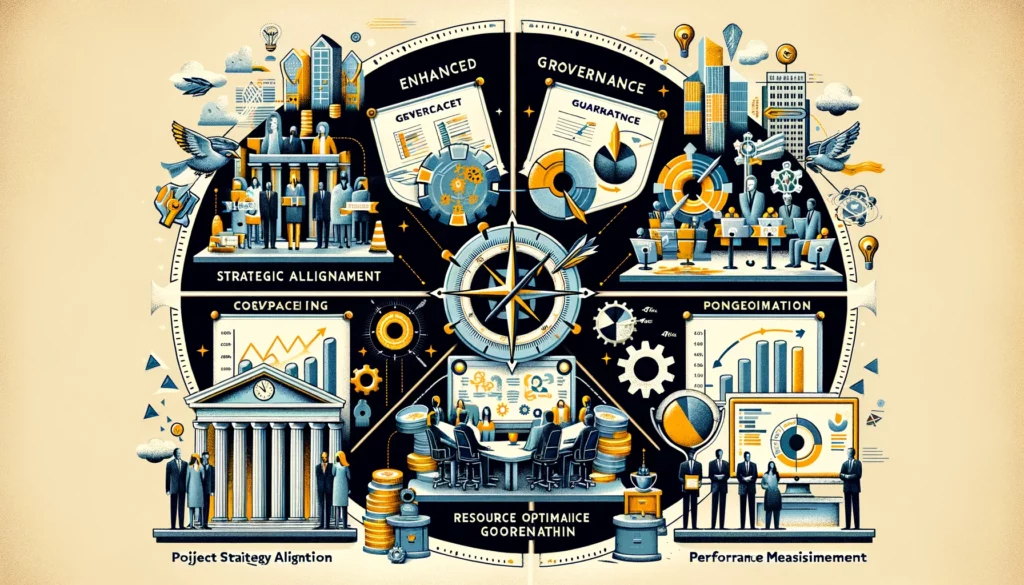
- Strategic Alignment: Ensure that all projects and programs in the portfolio are perfectly aligned with the company’s strategic objectives.
- Enhanced Governance: Establish robust governance structures to oversee the project portfolio, including clearly defined roles, responsibilities, and decision-making processes.
- Risk Management: Integrate a proactive risk management approach into the PPM process to identify, assess, and mitigate risks at the portfolio level.
- Resource Optimization: Use PPM tools to optimally allocate resources, ensuring that projects have the skills and funding necessary for success.
- Performance Measurement and Reporting: Establish key performance indicators (KPIs) to measure the effectiveness of the project portfolio and ensure transparent, regular reporting to management.
III. Benefits of PPM Integration
- Improved Decision-Making: A comprehensive, integrated view of the project portfolio enables informed decision-making that supports the company’s strategic objectives.
- Efficient Resource Allocation: Optimizing resource allocation reduces waste and increases the return on project investment.
- Enhanced Risk Management: An integrated risk management approach minimizes surprises and allows quick reactions to unexpected events.
- Increased Flexibility and Responsiveness: The ability to adapt quickly to market changes is improved, providing a significant competitive advantage.
- Strengthened Strategic Alignment: The entire project portfolio consistently supports the company’s long-term goals, promoting sustainable growth.
IV. Conclusion
Integrating project portfolio management with corporate management is not just about rules or control. Indeed, it is a dynamic strategy to maximize the value and effectiveness of project work. By doing so, companies can improve decision-making and align projects with strategic goals. Furthermore, by adopting the key plans mentioned and understanding the potential benefits, companies can greatly improve their ability to achieve their ambitions. As a result, they are better equipped to navigate market changes successfully.